
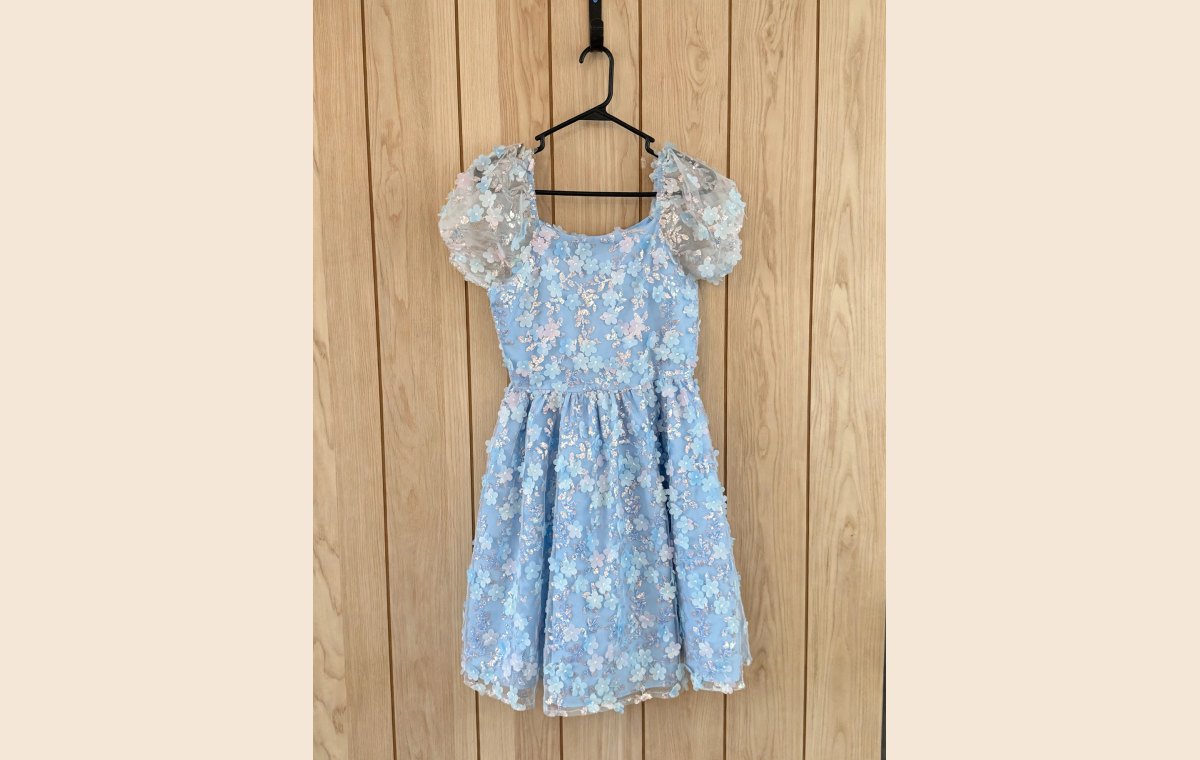
A special-occasion dress may have lace, lining, beading, a shaped waist, or a closure that disappears in one wide photo. A clear resale listing shows the whole garment and the small details a buyer would inspect in person. Good photos do not guarantee a sale or a price, but they can reduce avoidable questions and help buyers make a more informed decision.
Prepare the dress before the camera
Check the care label before washing, steaming, ironing, or treating stains. Some fabrics, embellishments, and vintage garments require professional care. Remove personal items from pockets and choose a sturdy hanger that will not stretch the shoulders.
Use honest, even light
Indirect daylight near a window is often useful. Avoid colored bulbs, heavy filters, portrait blur, and edits that change the fabric color or hide condition. If the color looks different on screen, say so and add a close photo in neutral light.
Choose a plain, private background
Use a clean door, wall, or backdrop with enough contrast to see the garment edges. Check mirrors, frames, windows, glossy hardware, and screens for faces, addresses, school names, mail, medication, and location clues. Strip GPS metadata from publication copies.
Take the nine photos buyers need
- Full front: centered, uncropped, and hanging naturally.
- Full back: including the neckline and hem.
- Side or silhouette: useful for volume, pleats, or layers.
- Neckline and bodice: show trim, lace, beading, or seams.
- Closure: zipper, buttons, snaps, ties, or hooks.
- Fabric and pattern: close enough to show texture without distorting color.
- Brand, size, fiber, and care labels: keep personal seller information out of frame.
- Lining and hem: show construction and wear areas.
- Every flaw: stains, pulls, missing beads, repairs, loose threads, discoloration, or damage.
Show measurements separately
Photographs can show where the tape was placed, but write the measurements in the listing too. Common flat-lay measurements include pit to pit, waist, hip when relevant, shoulder to hem, and sleeve length. State that measurements are approximate and taken by hand. Do not guess how a labeled size will fit every body.
Do not use a child model for a public listing
A hanger, dress form, or privacy-safe flat lay can show the garment without publishing a child’s face, body, school clues, or location. If an adult models an item, get clear consent and keep identifying details out of the frame.
Write condition notes that match the photos
“Good condition” alone is not enough. Say what you observed and where: a small pull near the left hem, a missing hook at the back, or light wear at the lining. Do not claim “like new,” “worn once,” a retail price, authenticity, or a fabric content unless you can verify it.
Review platform rules before listing
Fees, shipping, prohibited items, return rules, identity requirements, referral terms, and seller protections can change. Keep communication and payment inside the platform’s approved process, and never promise earnings or a sale time.
Optional referral link: If Vinted fits your resale plan, you can explore or join Vinted through Nikki’s referral link. Nikki may receive a referral benefit if you qualify and use this link. Eligibility, availability, fees, inventory, and referral terms can change, so review the current terms shown by Vinted before acting. As an Amazon Associate I earn from qualifying purchases.
Next, use the resale detail-photo checklist and the secondhand measurement guide.
Affiliate disclosure: This article contains the clearly identified Vinted referral link above. Nikki may receive a referral benefit if you qualify and use it. No new Amazon product recommendation was added because the available links have not completed destination, product, and attribution verification. As an Amazon Associate I earn from qualifying purchases.