
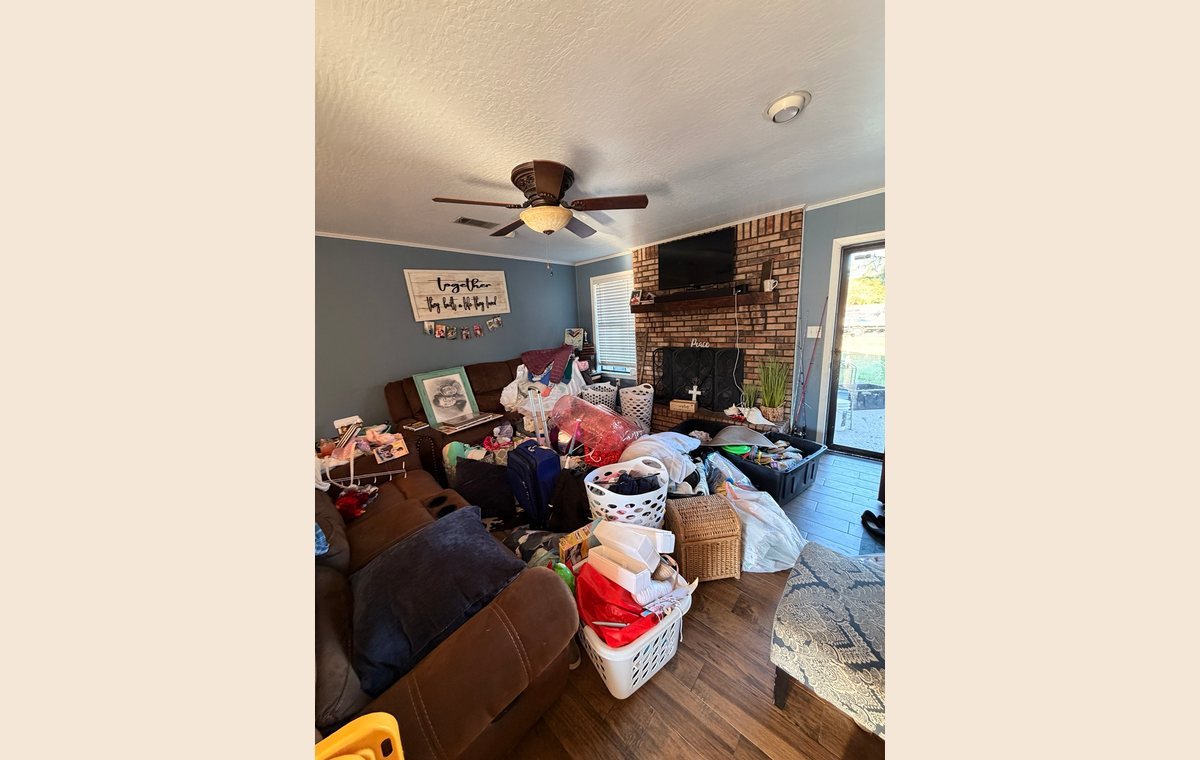
The cabinet under the kitchen sink tends to collect cleaners, bags, sponges, dishwasher supplies, bug products, old bottles, and things nobody remembers buying. I would not begin by measuring for pretty drawers. I would begin with ventilation, leaks, labels, and whether a child or pet can reach something dangerous.
Keep children and pets out during the reset
Choose a time when products can be supervised from beginning to end. Place them upright on a protected surface away from food, heat, flames, and curious hands. Do not leave an open cabinet or a pile of chemicals unattended.
Check for active water problems first
Look for dripping pipes, damp wood, swelling, staining, odor, pests, corrosion, or standing water. Do not cover a suspected leak with a liner and call the cabinet organized. Address plumbing, electrical, structural, pest, or mold concerns with an appropriate qualified professional.
Read every product label
Keep products in their original labeled containers unless the manufacturer specifically directs otherwise. Never pour a cleaner into a food or drink container. Follow storage, ventilation, protective-equipment, disposal, and emergency instructions on the label.
Never combine leftovers from different bottles
Cleaning chemicals can react dangerously. Do not mix products, pour unknown liquids together, or assume two cleaners are compatible because they are used in the same room. If a container is leaking, damaged, unlabeled, or unknown, isolate the area safely and follow local hazardous-waste or poison-control guidance.
Remove what does not belong near cleaners
Food, pet food, medicines, cosmetics, reusable grocery bags, paper goods, batteries, and children’s items may need another location. Keep anything that touches food preparation separated from chemicals according to its instructions.
Sort by use and risk
Create small groups: dishwashing, ordinary surface cleaning, trash supplies, and infrequently used products. Pesticides, drain openers, concentrated chemicals, sharp tools, and other high-risk items may require locked or higher storage away from children and pets. Under the sink is not automatically appropriate.
Use sturdy containers already at home
A washable dishpan, handled caddy, or rigid bin can contain one category if it is compatible with the products and strong enough for the weight. Avoid flimsy cardboard near plumbing and do not use a food container that could create confusion.
Keep plumbing and shutoffs accessible
Do not pack products around valves, disposal components, electrical connections, or pipes so tightly that a leak cannot be seen. Leave room to reach the shutoff and inspect the cabinet. Storage should support maintenance, not hide it.
Store bottles upright and readable
Put taller containers toward the back only if every label remains visible and they can be lifted without knocking over another product. Do not stack heavy bottles on unstable shelves. Keep lids closed and wipe the exterior according to label instructions.
Dispose of products through the right channel
Do not pour unwanted chemicals down a drain or into the yard unless the product and local authority explicitly allow it. Check municipal household hazardous-waste guidance. Keep products secure until they can be handled properly.
Finish with a five-minute monthly check
Look for moisture, leaks, pests, damaged containers, and products that migrated into the wrong place. Restock only what the household actually uses. A little empty space makes hazards easier to notice.
Pair this with the refrigerator-space reset and the room reset for covered surfaces.
Affiliate disclosure: I may earn a commission through clearly marked links. As an Amazon Associate I earn from qualifying purchases. Prices, availability, and terms can change. Buying nothing is always an option.