
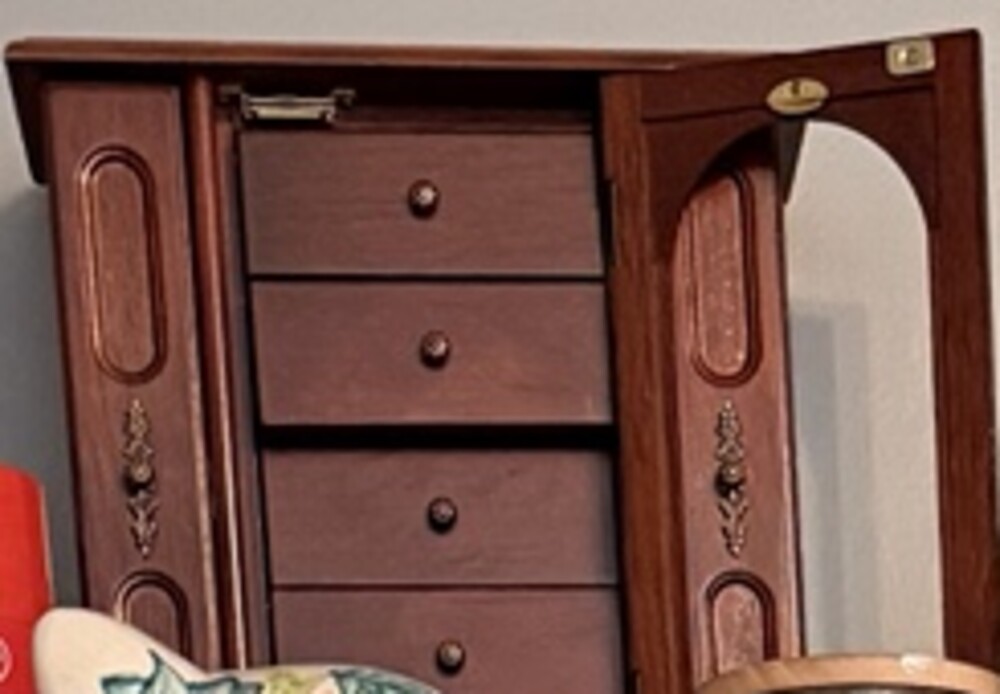
When necklaces, earrings, and little keepsakes collect on the dresser, it is tempting to shop for the perfect organizer. I would rather start by making the space work with what is already in the room. A small box, divided tray, teacup, clean food jar, or even an empty gift box may be enough once every piece has a clear job and a safe place.
Begin with one small sorting surface
Spread a soft towel on a table and work in good light. Bring over only the jewelry from one drawer, dish, or corner. Starting small protects delicate pieces and keeps the project from turning into an all-day decision marathon.
Separate what needs special care
Set aside broken clasps, loose stones, tangled chains, sharp pins, watches with leaking or damaged batteries, and valuable pieces that may need professional attention. Keep jewelry away from young children and pets because small pieces can be choking hazards. If you are unsure how to clean a particular metal, stone, or vintage item, do not experiment with household chemicals; follow the maker’s instructions or ask a qualified jeweler.
Use four honest categories
Wear now
These are the pieces you reach for in the current season. Give them the easiest spots.
Occasion
Dressier or seasonal pieces can sit farther back as long as they are protected and labeled.
Repair or decide
Limit this category to a small envelope or box and give yourself a decision date. A repair pile without a date becomes permanent clutter.
Release
Consider gifting, donating, recycling, or selling pieces that are safe and appropriate. Never promise a resale value; material, brand, condition, demand, and platform rules all matter.
Match the container to the problem
A shallow box can hold bracelets. Small dishes can separate rings or stud earrings. A piece of clean cardboard can hold paired earrings. A row of hooks already installed inside a closet may keep necklaces from tangling. Avoid adhesives or hanging methods that could damage furniture, paint, or valuable pieces.
Give necklaces breathing room
Fasten each clasp before storing it. Lay delicate chains flat or hang them separately so they do not knot together. Do not stack heavy pieces on top of fine chains. If a necklace is already tangled, use patience and good light rather than pulling harder.
Keep pairs and backs together
Pair earrings as you sort and store spare backs in one tiny labeled container. If one earring is missing, place the survivor in a short-term “find the mate” spot. At the next review, decide whether to repurpose or release it instead of carrying the mystery forever.
Protect privacy and security
Do not store high-value jewelry in a visible spot just because it looks pretty in a photo. Keep appraisals, receipts, personal engravings, and identifying paperwork private. For valuable or irreplaceable pieces, consider appropriate insurance, secure storage, and professional advice.
Make the system easy to close
The best no-buy system is one you can reset in under a minute. Leave a little open space, place the container where you naturally remove jewelry, and return pieces before they disappear under receipts and hair ties.
Pair this with the dresser-top drop-zone reset or the one-basket bedroom reset.
Affiliate disclosure: No new affiliate recommendation was added because no relevant user-owned link completed destination, product, and attribution verification. As an Amazon Associate I earn from qualifying purchases.