Gather one category at a time
Start with toothpaste, shampoo, soap, deodorant, toilet paper, or another category that causes repeat purchases. Collect products from the bathroom, linen closet, bedroom, travel bags, and shopping totes. Do not empty the whole house at once.
Keep personal prescriptions, medical products, and sensitive hygiene items private and securely stored. Follow every product’s storage instructions and keep items away from young children or anyone who could misuse them.
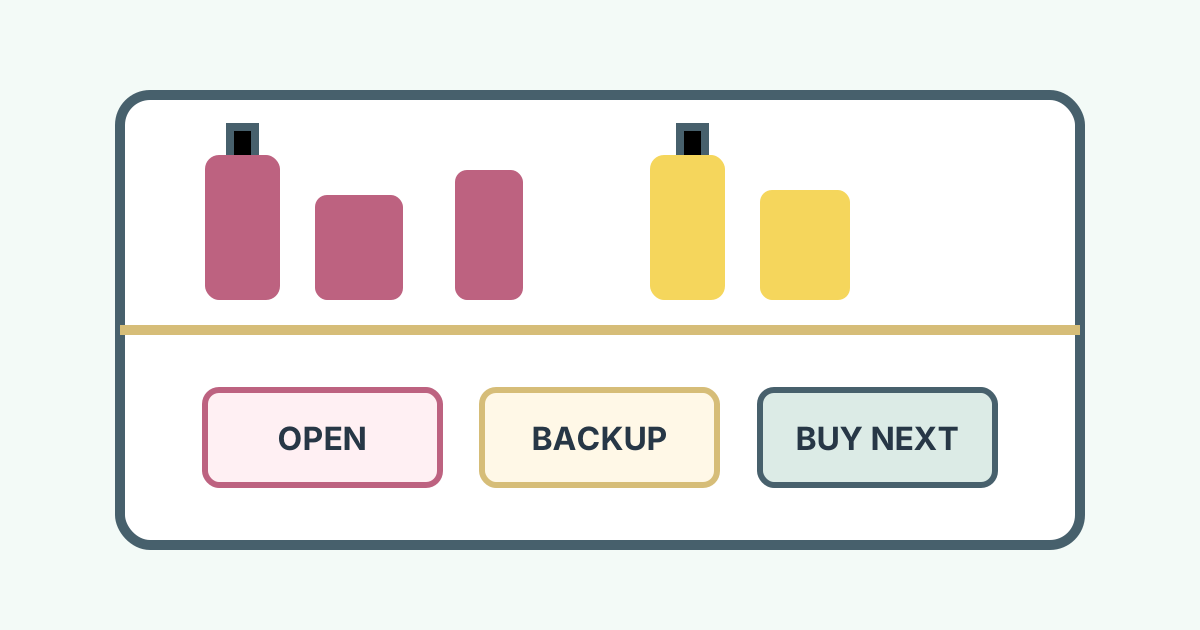
Make three zones
- Open: the product currently being used.
- Backup: one unopened replacement when the household truly needs one.
- Buy next: the item that belongs on the next appropriate shopping list.
Use a shelf, shoebox, basket, or labeled section you already own. Put the oldest suitable product in front and check dates or condition before using it.
Set a reasonable backup number
A family may need more than one toothpaste or soap because several bathrooms are in use. The goal is not an arbitrary “one of everything” rule. Choose a number based on household size, storage space, how quickly the item is used, how hard it is to replace, and what the budget can support.
A sale is not savings when the extra products expire, leak, irritate someone, or hide the item you needed.
Use a minimum level instead of guessing
Decide when an item goes on the list. For example, add toothpaste when the backup is opened, not when the last tube is completely empty. For toilet paper, choose a household minimum that leaves time for the next regular trip.
Keep one shared list in a location everyone can reach. Older children can add an item when they open the backup, but an adult should review the list before ordering.
Do not combine products carelessly
Keep products in original labeled containers. Do not top off one container with another formula or mix cleaners, medicines, cosmetics, or personal-care products. If an item looks contaminated, has changed texture or smell, or has been recalled, follow manufacturer and official disposal guidance.
Check before every household order
Take a photo of the backup shelf or open the household list before shopping. Compare unit price only for amounts the family will use. The unit-price deal check helps separate a real value from a large package that creates waste.
Reset the zones once a month
Move stray items home, wipe spills according to label directions, check dates, and remove products no one can safely use. Donate only unopened products accepted by a legitimate local organization; confirm its rules first.
This is the same principle behind building a baby list without duplicates: see what you have before adding more.