
A family outing can fit the budget on paper and still cost more than expected by the time everyone gets home. Admission is only one line. Transportation, parking, food, lockers, convenience fees, souvenirs, and the tired-trip-home stop all count too. Planning the whole cost does not take the joy out of the day. It protects the money set aside for it.
Start with the amount the family can truly spend
Choose a total from the current budget before browsing upgrades and add-ons. The Consumer Financial Protection Bureau recommends looking at real spending and including less frequent recreational costs rather than building a budget around what we think we “should” spend. If essentials or minimum debt payments are at risk, choose a free or lower-cost outing instead.
Write down every likely cost
Admission
Count every adult, child, senior, or caregiver ticket. Check age rules and whether taxes or online service fees appear at checkout.
Transportation
Include fuel, transit fares, tolls, rideshare, parking, and any shuttle fee. If driving, think about the full round trip, not just the distance there.
Food and drinks
Check the venue’s current outside-food policy before packing anything. Plan for allergies, safe food storage, and enough water where permitted. If outside food is prohibited, price the on-site options or eat before arrival.
Equipment and convenience fees
Lockers, strollers, wagons, rentals, reservation fees, and card-only purchases can change the total.
Extras
Decide before leaving whether the budget includes a souvenir, photo, treat, or donation. “We will see” is hard for children and expensive for adults.
Treat every coupon as unverified until checked
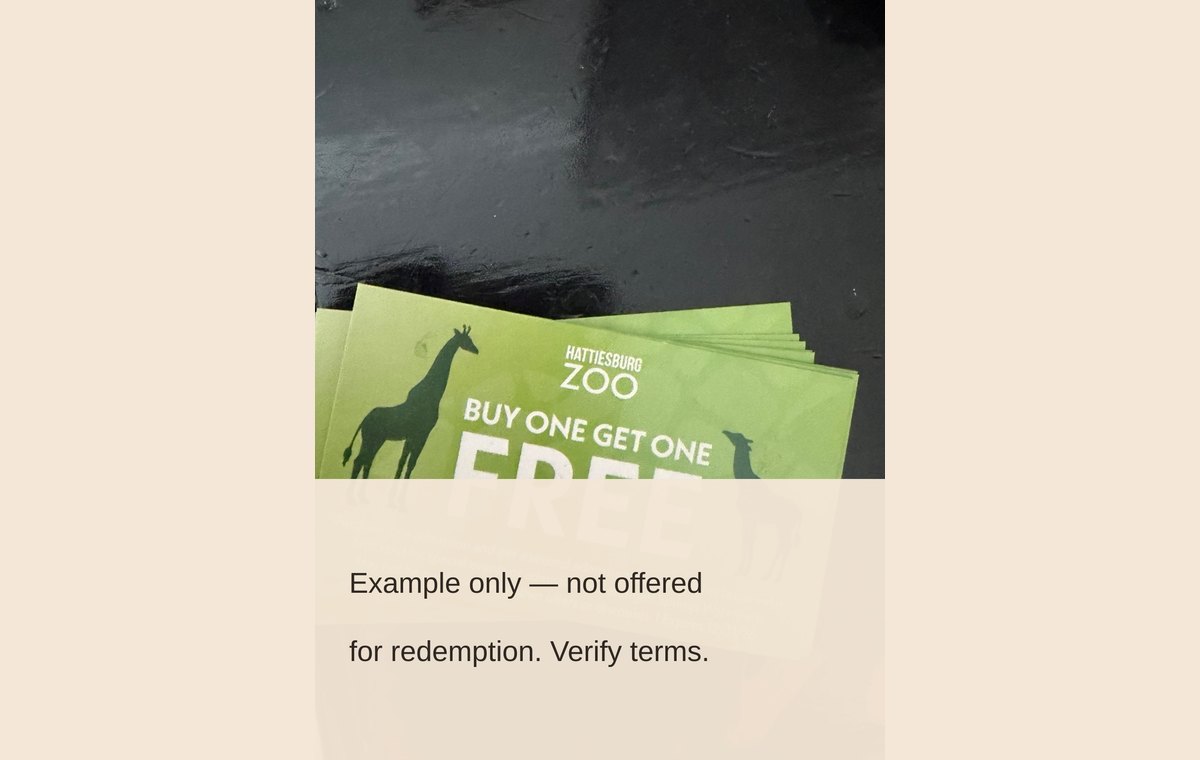
The photographed zoo coupons in the image are an example of something a family might review; they are not offered for redemption here. A photographed or old coupon may be expired, nontransferable, location-specific, limited to certain ticket types, or incompatible with another discount. Check the issuer’s current official terms, expiration date, participating location, exclusions, and redemption method before counting any savings.
Compare the discounted total—not the headline
A “free” ticket may still require a full-price purchase, fees, or a date you would not otherwise choose. Compare the final checkout totals for each valid option. Do not buy a membership only because the per-visit math looks good unless the family is realistically likely to use it enough.
Add a small, named cushion
If the budget allows, include a modest buffer for an ordinary surprise such as a higher parking fee or needed snack. Keep emergency funds for actual emergencies. A cushion is not permission to spend automatically; unused money can return to the family goal.
Tell the family the plan kindly
Before arrival, explain what is included: “We packed lunch and each person may choose one treat,” or, “Today is admission only, and we are taking photos instead of buying souvenirs.” Clear expectations are kinder than negotiating at every gift-shop display.
Do a five-minute review afterward
Keep the receipt or note the total. Ask what was worth it, what was skipped, and what cost appeared unexpectedly. That information makes the next outing plan more accurate.
Use the kids’ activity cost checklist for another whole-cost decision, and the 24-hour family spending pause before adding an unplanned upgrade.
Planning source: The CFPB’s spending assessment guidance emphasizes realistic categories and less-frequent recreation costs. The primary phrase is an editorial choice informed by practical reader intent; no search-volume claim is made.
Affiliate disclosure: No new affiliate recommendation was added because no relevant user-owned link completed destination, product, and attribution verification. As an Amazon Associate I earn from qualifying purchases.