
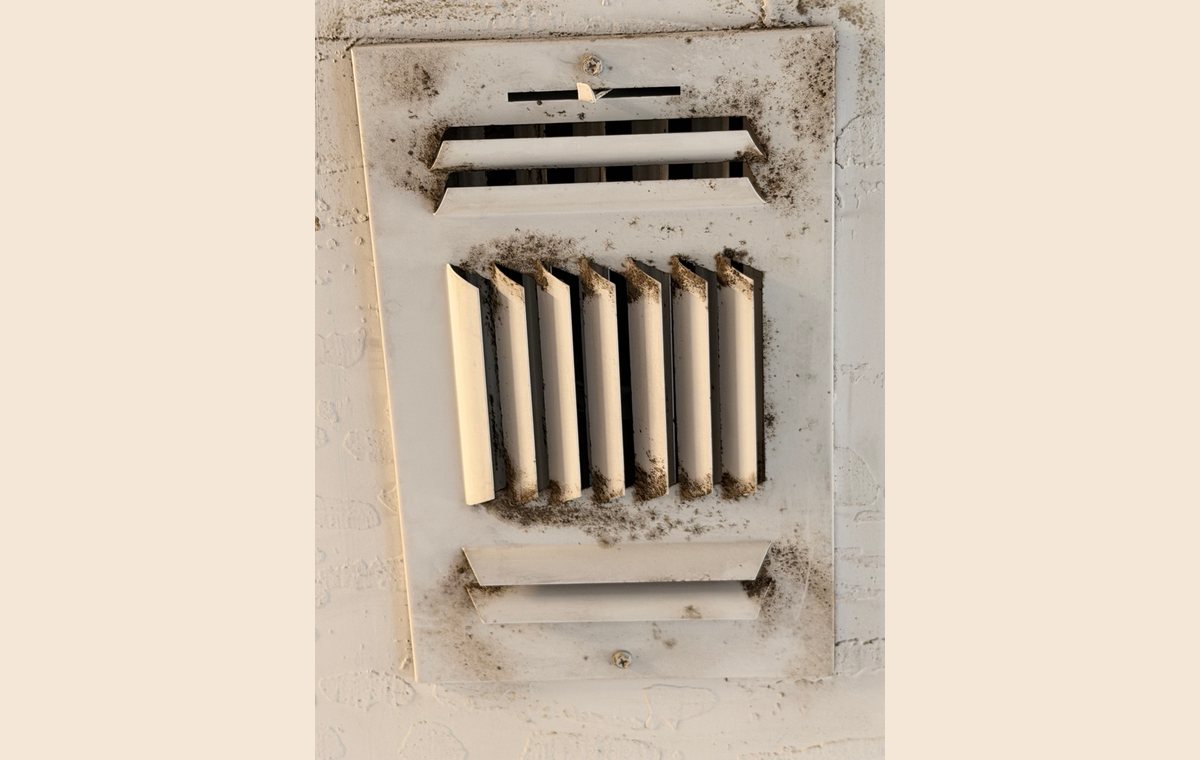
Dark spotting around an air register is the kind of thing that can make a mom’s mind jump straight to the worst answer. I want to slow that jump down. The photograph on this page shows visible dark marks, dust, and staining around a vent. It does not prove what the material is. The U.S. Environmental Protection Agency says a substance may look like mold without being mold, and an expert may be needed for a positive determination.
Document before disturbing it
Take clear photographs of the register, nearby ceiling or wall, and any water staining. Note the date, room, recent leaks, musty odors, condensation, and whether the marks return after ordinary cleaning. Renters should report the condition in writing according to the lease and local requirements. Keep copies of messages and photographs. Do not remove a vent cover if doing so would be unsafe, violate a lease, expose wiring, or require working at an unsafe height.
Look for moisture clues
Moisture control matters more than a quick cosmetic cover-up. Check for visible condensation, a roof or plumbing leak, a clogged or overflowing condensate drain, wet insulation, water damage, and unusually high indoor humidity. The CDC advises keeping indoor humidity no higher than 50 percent when possible and fixing leaks so mold does not have moisture to grow. An HVAC professional can inspect components that are not safely visible.
Do not identify “black mold” by color
Color alone does not identify a species or predict a health effect. Dust, soot-like deposits, ordinary dirt, staining, and biological growth can overlap in appearance. The CDC does not recommend routine home mold testing; if mold is present, the practical priorities are safe removal and correcting the moisture source. A specific diagnosis from a social-media photo can create false reassurance or unnecessary fear.
Know when not to turn the system on
EPA guidance says that if you know or suspect the HVAC system itself is contaminated with mold, do not run it until the situation has been evaluated because the system could spread contamination. That is different from seeing a little household dust on a removable register. If marks are inside ducts, insulation is wet, particles are blowing out, or a musty odor starts when the system runs, ask a qualified HVAC or indoor-environment professional to inspect the source.
Protect people who are more vulnerable
People with asthma, chronic lung disease, immune suppression, or significant mold allergies should not participate in mold cleanup, according to CDC guidance. If anyone has trouble breathing, severe symptoms, or another urgent medical concern, seek appropriate medical care. This article cannot diagnose a building condition or a health problem.
Do not mix cleaning products
If a qualified source says a small hard surface can be cleaned safely, follow product directions, ventilate appropriately, and protect skin and eyes. Never mix bleach with ammonia or other cleaners; CDC warns that dangerous vapors can result. Do not paint or caulk over suspected growth before fixing the water problem and cleaning the area. Porous or wet HVAC insulation may require professional removal and replacement rather than surface cleaning.
Be cautious with duct-cleaning sales claims
EPA does not recommend routine air-duct cleaning for every home. It suggests considering it in specific circumstances, including substantial visible mold growth inside hard-surface ducts, vermin infestation, or excessive dust and debris that is actually released into the home. Ask a provider to show the problem, explain the moisture source, provide references, and describe the exact work instead of accepting a fear-based diagnosis.
Create a written next-step list
- Photograph and date the condition.
- Check for water, condensation, odor, and recent leaks.
- Review the HVAC filter and maintenance instructions without exceeding your skill level.
- Notify the landlord or responsible property owner in writing when applicable.
- Call a qualified professional when the system, wet insulation, hidden moisture, a large affected area, sewage, or health risk is involved.
- Verify that the moisture source is fixed before cosmetic repair.
Official guidance reviewed October 29, 2026: EPA: Should You Have the Air Ducts in Your Home Cleaned?, EPA: Mold, Moisture and Your Home, and CDC: Mold. Guidance and local requirements can change.
For ordinary maintenance planning, see how to weigh repair versus replacement and no-cost energy habits.
Affiliate disclosure: I may earn a commission through clearly marked links. As an Amazon Associate I earn from qualifying purchases. Prices, availability, and terms can change. Buying nothing is always an option.