
Disclosure: This article includes paid links. As an Amazon Associate I earn from qualifying purchases. I may also earn a commission from qualifying affiliate signups. Buying something is optional; use what you already own first.
School lets out, everybody wants something, and the afternoon can feel busy before you even make it home. An after-school routine should take a few decisions off your plate. It does not need to turn your kitchen into a classroom or make every minute productive. I want a plan that leaves room for hungry kids, tired moms, late buses, and the days when practice changes everything.
Start with the afternoon you actually have
Write down arrival time, dinner, bedtime, and any activities. Include the drive between them. If your child gets home at four and leaves for practice at four thirty, that is a snack-and-reset window, not a full homework block. A child who gets home earlier may have more room for quiet play before tackling assignments. Plan around your real anchors instead of copying another family's schedule.
Choose three things you want the routine to protect. Mine would be a chance to reconnect, enough time for school responsibilities, and a manageable start to tomorrow. Everything else can move. When you name the priorities, you can let go of the idea that a successful afternoon requires a spotless house and a completed enrichment activity.
Make arriving home a simple sequence
Give belongings one landing place. Shoes go where they will be found tomorrow; backpacks go near the homework area; papers needing a signature go into a familiar tray or folder. Use a box or shelf you already own. Ask your child to do the same small sequence every day until it becomes easier to remember.
Then offer water and a snack that fits your child's needs and your grocery budget. Keep a few familiar choices available instead of negotiating a new menu each afternoon. You can wash fruit ahead of time or portion something you already bought. A predictable snack helps you move into the next part of the day without adding another shopping project.
Give kids a little room before asking questions
Some children want to tell you everything in the car. Others need quiet before they can explain their day. Try a warm greeting and one low-pressure invitation: “I'm glad you're home. Want to talk now or after your snack?” Connection can be sitting together, sharing a funny moment, or listening while they unpack.
Downtime does not have to mean an unlimited screen session. Offer two or three options, such as drawing, reading, outside play in a safe space, or sitting quietly. Agree on what comes next before starting. A timer can help with transitions, but avoid treating the timer as more important than noticing that your child needs help shifting gears.
Put homework in a realistic place
Look at what is due, what materials are needed, and whether your child understands the directions. Break a long assignment into smaller steps. For younger children, getting started together may help more than repeatedly calling from another room. Older kids can choose the order of their tasks and tell you when they want a check-in.
If homework regularly takes over the entire evening, contact the teacher with specific examples rather than assuming the child needs a stricter routine. Ask what amount of time is expected and which parts should be prioritized. A home schedule can support learning, but it cannot solve unclear directions or an assignment that needs school support.
Add one contribution, not a giant chore list
Choose a brief household job: empty the lunchbox, set the table, feed a pet with supervision when needed, or put away clean clothes. Show what finished looks like. A manageable contribution lets children take part in family life without spending the whole afternoon hearing reminders.
Pair the job with an existing moment. Emptying the lunchbox happens when the backpack comes off; setting the table happens before dinner. Those connections are often easier to remember than a list posted where nobody looks. If a task keeps failing, simplify it or change when it happens before adding more consequences.
Use two versions of the routine
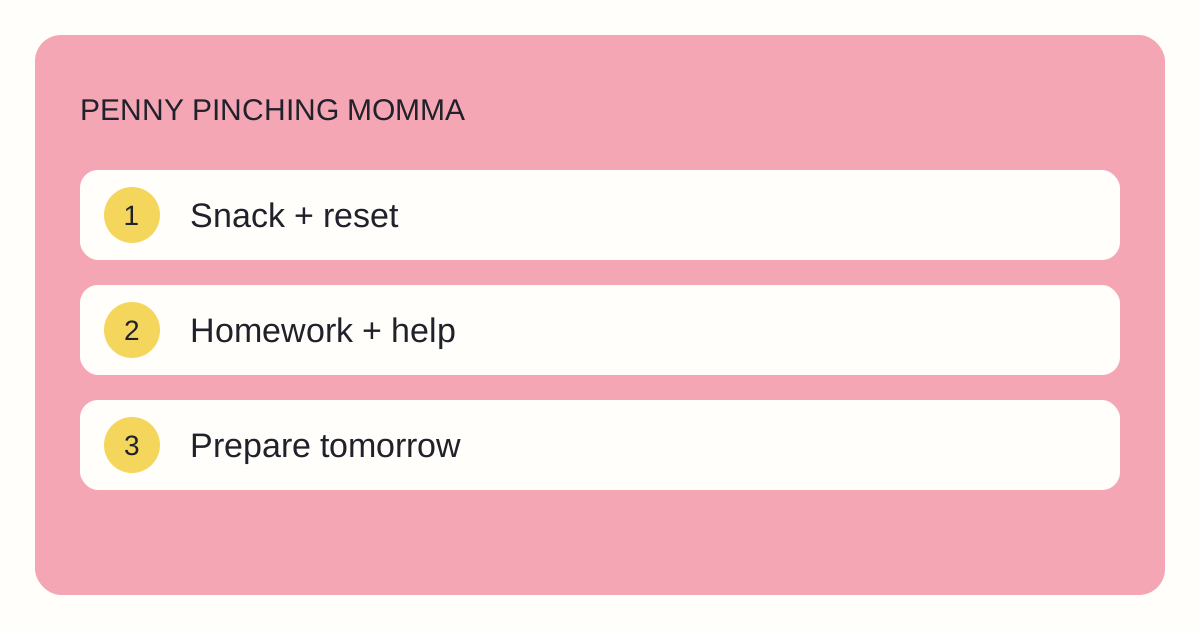
For an ordinary day, try arrival and snack, a short reset, homework, a household contribution, and dinner. The clock times are flexible. For an activity day, protect snack, essential homework, and tomorrow's preparation. Move the optional chore or extra activity to another time. You are adapting the system, not starting over.
For teens, make the plan together. Ask when they concentrate best, what commitments they have, and what makes transitions difficult. Agree on a few boundaries, including device use and bedtime preparation, while giving them room to manage the details. A routine works better when the child understands the reason behind it.
Close the afternoon by helping tomorrow
Before bedtime, check the calendar, put required items back in the backpack, and choose clothes if that helps. Keep this brief. You can use the school-morning launch pad guide to give those items a home. For nights with practices, our busy-night meal ideas can take one more decision off your plate.
Try the routine for a week and ask what helped. Change one sticking point instead of rewriting everything. A calmer afternoon may still include a forgotten paper or a tired child. The goal is a familiar path back to what matters: connection, responsibilities, and enough breathing room to enjoy being together.